


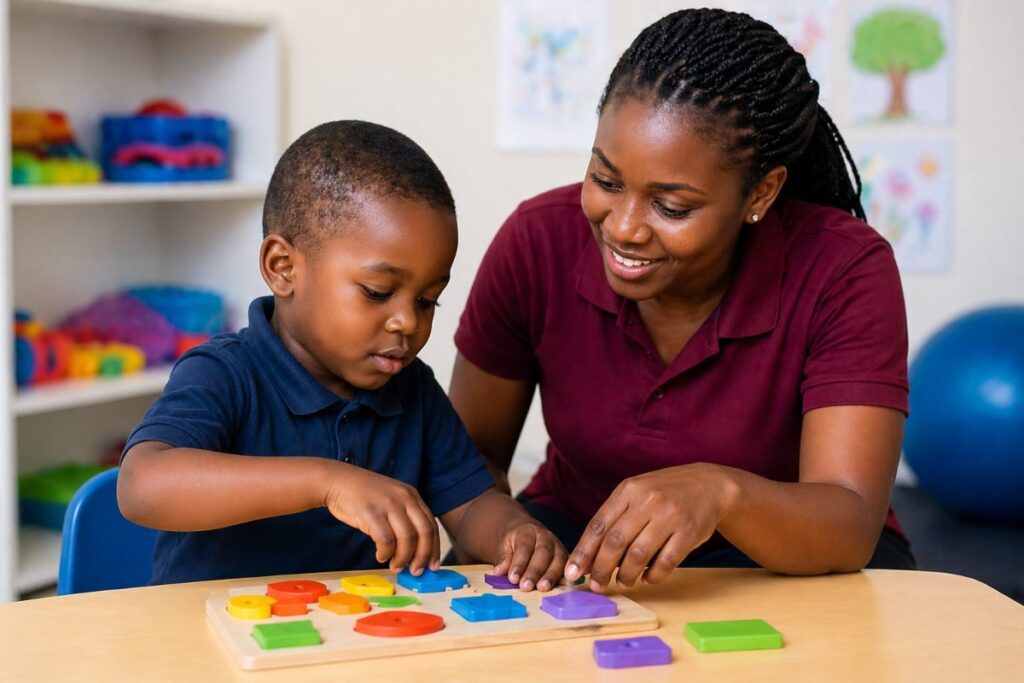
Early childhood is one of the most important stages in a child’s growth and development. During these early years, the brain develops rapidly, creating the foundation for communication, learning, behaviour, emotional regulation, and social interaction. For children with developmental delays, autism, speech difficulties, or other learning challenges, early support can make a significant difference in long-term outcomes.
At Holmeside School, a leading Special Needs School in Nairobi, we understand the importance of identifying and supporting developmental needs as early as possible. Through structured early intervention programmes, children receive the support they need to build essential skills and reach their full potential.
What is Early Intervention?
Early intervention refers to specialized support and therapeutic services provided to young children who may be experiencing developmental delays or learning challenges. These services are designed to support growth during the critical early years of development.
Early intervention may include:
- Speech and language support
- Behavioural support
- Occupational therapy
- Sensory integration activities
- Social interaction training
- Structured learning activities
The goal is to help children develop foundational skills that support future learning and independence. Our autism support programmes in Nairobi and Early Intervention in Kenya relies heavily on the above mentioned early interventions and therapy support services.
Why Early Intervention Matters
The earlier developmental challenges are identified and addressed, the greater the opportunity for improvement. Young children’s brains are highly adaptable, making early childhood the ideal time to introduce supportive learning and therapy strategies.
Early intervention helps children:
- Improve communication skills
- Develop social interaction abilities
- Build emotional regulation skills
- Strengthen focus and attention
- Improve confidence and independence
Children who receive early support are often better prepared for structured learning environments and everyday life activities.
Supporting Communication and Language Development
Many children with developmental delays experience difficulties with communication and language. Early intervention programmes help children build essential communication skills through structured interaction, play-based learning, and speech support activities.
At Holmeside School Nairobi, learners are supported in developing:
- Expressive language skills
- Listening and comprehension abilities
- Social communication
- Confidence in interaction
Improved communication helps children express their needs, build relationships, and participate more effectively in learning environments.
Building Social and Emotional Skills
Social interaction and emotional development are important aspects of child growth. Some children may struggle with making friends, understanding emotions, or adapting to routines and environments.
Early intervention supports:
- Social engagement
- Turn-taking and sharing
- Emotional regulation
- Positive behaviour development
- Confidence building
Structured support helps children feel more secure, calm, and connected within learning and social environments.
Improving Learning Readiness
Children benefit greatly from developing foundational learning skills before entering more structured academic settings. Early intervention activities help improve:
- Attention and concentration
- Following instructions
- Fine motor skills
- Problem-solving abilities
- Sensory regulation
These skills create a stronger foundation for future academic success.
The Role of Structured Learning and Therapy
At Holmeside School, early intervention combines individualized learning with therapeutic support to create a holistic developmental approach. Structured routines, guided activities, sensory support, and positive reinforcement strategies help learners feel supported and motivated.
Therapeutic support such as ABA therapy, speech therapy, and occupational therapy can further enhance developmental progress by addressing specific learning and behavioural needs.
Partnering with Parents for Better Outcomes
Parents play a critical role in supporting child development. Consistency between school and home environments helps reinforce progress and encourages positive growth.
At Holmeside School, we work closely with parents through:
- Regular communication
- Guidance and support
- Progress monitoring
- Collaborative goal setting
Strong parent-school partnerships contribute significantly to successful developmental outcomes.
Why Choose Holmeside School for Early Intervention?
Holmeside School provides a nurturing and supportive environment where children receive individualized attention tailored to their unique developmental needs.
As a trusted Special Needs School in Nairobi, we focus on:
- Holistic child development
- Structured early intervention programmes
- Individualized support
- Therapy-integrated learning
- Emotional and social growth
Our goal is to help every child build confidence, independence, and lifelong learning skills.
👉 Explore our Early Interventions Programme at Holmeside School.
Final Thoughts
Early intervention can positively shape a child’s future by providing support during the most important years of development. With the right guidance, structure, and encouragement, children can develop essential communication, social, emotional, and learning skills that help them thrive.
At Holmeside School Nairobi, we are committed to supporting learners with diverse needs through individualized care, therapy support, and specialized education programmes designed to unlock every child’s potential.
Learn More
Looking for early intervention support for your child? Visit our Admissions Enquiry page to learn more about placement, therapy support, and enrolment at Holmeside School Nairobi.
📞 Call/WhatsApp: +254 715 520 598 for admission assistance and guidance.
Have you ever noticed a developmental milestone that concerned you? Share your experience in the comments below.
What a read! I have found this article very informative. Many parents assume children will “catch up” with time, but early intervention can make a huge difference. Has anyone here had experience with speech therapy or occupational therapy improving their child’s development?
This is a very informative article. Many parents assume children will “catch up” with time, but early intervention can make a huge difference. Has anyone here had experience with speech therapy or occupational therapy improving their child’s development?
This is what education should look like early intervention+real understanding+right multidisciplinary team=brighter future for autistic kids, proud to see a school investing in what actually matters you are not just teaching you are giving this kids the tools to thrive on their own terms.
I have really enjoyed reading this and how it highlighted the importance of early intervention for children with Autism Spectrum Disorder. Early support can make a huge difference in communication, social interaction, learning, and independence, especially when families, teachers, and therapists work together consistently. I also appreciate how you emphasized patience, understanding, and creating supportive environments where every child can grow at their own pace. This was both informative and encouraging.
This article is both informative and educative. Understanding and early support for the children is imperative. Kudos to the institution for giving children an opportunity to thrive.
In my experience as an Occupational Therapist I support early intervention, it is one of the most powerful tools in supporting children with autism. The earlier we identify challenges and build on a child’s strengths, the greater the opportunities for meaningful progress in communication, social interaction, sensory regulation, and everyday independence.
As a parents be there for you kids don’t leave your house girl to spend all time with your kids, spend some time with your kids and note any strange behavior then seek guidance for early intervention. And Know that autism can be noticed as early as two years